
Elsir Haimoura Legacy!
• Al-Sir Muhammad Ahmad Haimoura • Al-Sir Haimoura • 1985 Sudanese Intifada • Sudan Trade Union Alliance 1985 • National Democratic Forces Union Sudan
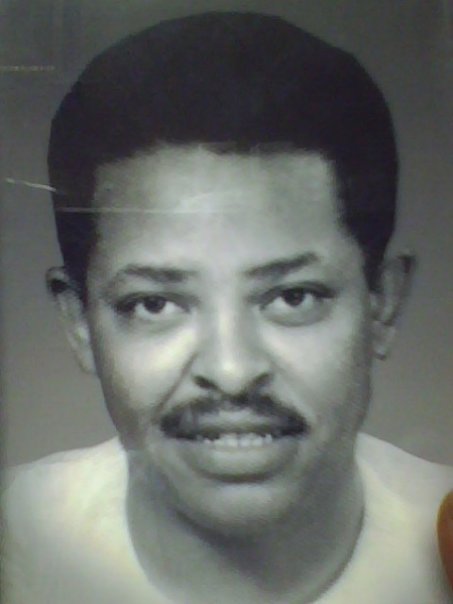
Who was Elsir Haimoura
History is not only shaped by leaders on public stages; it is forged by principled stances and covert tactics carried out behind closed doors in the dead of night, far from the eyes of repressive security apparatuses. Among those pivotal turning points in modern Sudanese history was a prolonged series of secret meetings that began in late 1984. This movement formed the solid nucleus and the culmination of months of arduous work, ultimately leading to the historic Civil Disobedience and General Political Strike that overthrew the regime of Jaafar Nimeiry on April 6, 1985.
There are aspects and details of that era that remain unspoken of in mainstream historical literature, particularly the intellectual and organizational aftermath of the July 1971 events tied to Hashim al-Atta’s coup. Following those events, Nimeiry developed a deeply personal and violent animosity toward the Sudanese Communist Party, forcing most official party leaders and members into hiding in clandestine safe houses or cemeteries, while others languished in the regime's detention centers.
In this severe organizational vacuum, a distinct group of cadres and prominent figures emerged to lead the leftist and political struggle, completely independent of the official line of the Sudanese Communist Party. This group comprised unyielding national figures, including: my late father, the biochemist Al-Sir Muhammad Ahmad Haimoura, Mr. Al-Sir Makki, Mr. Al-Tahir Abdel-Basit, and Mr. Muhammad Ahmad Omar (the prominent leader from the Gezira Scheme), along with the renowned late economist Muhammad Ibrahim Kabaj, who, alongside Mr. Al-Sir Makki, was a near-daily presence in our lives and home during our childhood.
This group lived an outwardly "ordinary" and visible life in society, which shielded them from the intense surveillance usually focused on those in hiding. The reason for this lay in their intellectual stance; they had rejected and disagreed with the political line adopted by the other faction of the Party during that era. Within the circles that crossed paths with them, the name of the poet and lawyer Abdel-Basit Sabderat emerged. However, the two paths could not have been more different. While Sabderat chose to join the regime directly and climb the ranks of Nimeiry's May government—later becoming famous for defending Nimeiry during the post-revolution trials—the group of my father, Al-Sir Makki, and Kabaj flatly refused to hold any official positions or make any concessions to the regime, even after splitting from the Party. They remained steadfastly committed to their independent, national democratic line—vital historical truths that many current members of the Communist Party prefer not to delve into or mention today.
From this principled perspective and economic standpoint, and starting in late 1984, our home in the Al-Amarat neighborhood of Khartoum transformed into one of the main sanctuaries for organizing popular resistance and rallying national ranks under the innocent social guise of "dinner invitations."
I was a fifteen-year-old boy at the time, and while I was certainly not the primary official in charge of security, I had the honor of being a field cadre within the security team (Team Al-Tameen) belonging to the "National Democratic Forces Union" organization. The word "security" (Tameen) in the lexicon of underground anti-dictatorship operations did not mean armed guards or standing traditionally at doors. Instead, it was an active tactical process designed to distract the security apparatus and mask the safety of the attendees by removing any suspicion from the meeting location.
The greatest risk lay in the accumulation of unfamiliar cars belonging to trade union and political leaders around our house, which would have immediately alerted the security forces' informants. This is where my field role came into play; we intercepted those cars and dispersed them away from the meeting place, parking them at my friends' houses across the Al-Amarat neighborhood.
This required no persuasion on my part; rather, it was executed through a clever, suspicion-deflecting tactic. I would casually give my friends the impression that it was a great opportunity to take the cars for a joyride around the block and park them near their homes, only returning to me after the alleged "party" was over to hand back the keys. This simple yet brilliant deception completely blinded Nimeiry's security apparatus, and the house appeared entirely quiet and normal from the outside.
These meetings began with a core nucleus composed of representatives from 11 or 12 trade unions, but the national ambition was far broader. Continuous subsequent meetings took place over months to expand the alliance and integrate vital and influential professional unions, such as the Medical Association and the Engineers Association. This extensive work resulted in distributing the logistical and security burden across several safe patriotic homes in Khartoum. Some meetings were hosted at our house, while others were held in the homes of prominent national figures, such as the residence of the renowned internal medicine specialist Dr. Ahmed Najib, and the house of Mr. Ahmed Ezzi (Shell Company), to name but a few.
Inside our home during those sessions, the atmosphere was thick with historic debates. My memory vividly holds the names of towering figures who filled the room with their commanding presence, including Mr. Muhammad Ali Al-Mahsi (the well-known chartered accountant), Mr. Al-Sir Makki, Mr. Muhammad Ahmad Omar representing the Democratic Farmers in the Gezira Scheme, Dr. Siraj (General Secretary of the National Democratic Forces Union), alongside a striking presence of the prominent trade unionist Hassan Muhammad Ali, one of the famous major merchants of El-Obeid, who steadfastly represented the leftist line for merchants and farmers in the Kordofan region.
From this integrated chain of extended secret meetings, and from this shared logistical and security resilience between patriotic homes and independent intellectual groups—which began months before the popular explosion—the broad trade union coalition was crystallized. This movement culminated in March and April 1985 with the drafting of the Civil Disobedience and General Political Strike Charter, which completely paralyzed the regime and forced the People’s Armed Forces to align with the choices of the Sudanese people on the historic sixth of April.
Documenting these precise details today is not merely an act of reminiscing; it is a historical duty to highlight the sheer brilliance of the Sudanese masses and organizations in managing long-term underground battles against tyranny. It stands as a tribute to the memory of my father Al-Sir Haimoura, Al-Sir Makki, Muhammad Ibrahim Kabaj, Al-Tahir Abdel-Basit, Muhammad Ahmad Omar, Hassan Muhammad Ali, and all the honorable souls who turned their principles and their homes into fortresses of freedom.